Celebrating Christmas

The Church at Christmas Time.

This is the time of year that millions of people around the world recognize Advent, marking the period of anticipation and preparation for the celebration of the birth of Jesus Christ. Traditionally, Advent serves as a time for reflection, prayer, and spiritual readiness. It is absolutely true that Advent, as a month-long celebration, is not found in scripture. It is also equally true that there is no way of knowing the exact day when Jesus was born.  These last two statements have led many Christians to adamantly maintain a “no-Christmas” policy when it comes to congregational worship and Bible study.  To these individuals, the mere mention of the birth of Christ during the month of December constitutes giving into denominationalism and allowing worldliness to infiltrate the church. However, when we step back and seriously review this mindset several incongruencies immediately arise.
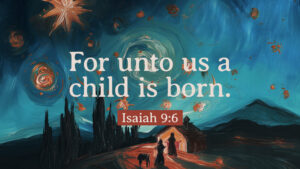

First, and foremost, the birth of Jesus holds supreme and profound significance in Christian theology. It represents both the fulfillment of prophecies and the arrival of God’s promise to humanity. This singular event is God’s culmination for bringing hope, peace, and the possibility of redemption to the world. So we must ask ourselves, “Why is it unacceptable for church members to refer to Jesus’ birth just because the calendar reads December”? There is a huge logical inconsistency when Christians do not mind a sermon centered upon “freedom” around July 4 but become incensed if the birth of Jesus is mentioned around Dec. 25.
Secondly, the argument of “be silent where the scriptures are silent” when referring to Christmas quickly falls apart when events and special days are more to our liking.  Congregations hold youth events, put on a VBS, meet for a men’s or women’s breakfast, have a “Friend’s and Family Day”, organize lectureships, etc. none of which are specifically mentioned or alluded to in scripture.  The Apostle Paul put the matter to rest in Romans 14:5-6 arguing that each Christian has the liberty to be fully convinced in their own mind about whether to observe special days or not, as long as salvation is not entrusted in  these observances. Paul made it clear that keeping certain days to voluntarily honor God is completely permissible. The only strict command made here is in forbidding pious judgements against those who wish to honor God.
Last but not least, refusing to recognize Christmas during the holiday season eliminates common ground that might otherwise be used for opening up the Gospel to someone who is lost.  There is an old but wise saying in education that tells us, “a teacher must meet the student where the student is before the student can be taught”. Jesus perfectly understood this basic tenet. When He encountered the Samaritan woman at the well, the adulterous woman, and the rich ruler, He did not immediately enter into a deep theological discourse.  Instead, He met them at their level and then gently urged them upward.  While we do not celebrate Dec. 25 as a holy day, it is obvious that many who are unchurched do, and this offers us a unique moment in the year to enter into dialogue and teaching.
This season invites Christians to renew their hearts and minds concerning Jesus’ arrival but also for His eventual return, fostering a deeper sense of anticipation and faith within the community. Through practices like prayer, scripture reading, and acts of kindness, Christmas encourages individuals and congregations to realign their lives with the teachings of Christ. It serves as a reminder that the birth of Jesus is not only a historical event but also a living reality that continues to shape and inspire Christian faith today.